
It’s easy to miss prostate cancer early. The signs can be mild, come and go, or look like the normal wear and tear of getting older. Some men feel completely fine for a long time.
You’re not overreacting if you want a clearer picture. This guide walks you through the early signs many men ignore, when to call a doctor, and what to expect from basic screening and tests.
One reason prostate cancer is tricky is that prostate ca symptoms can be subtle at first. I want you to feel clear about what to watch for and when to act.

Prostate CA Symptoms: Why the early stage can feel like nothing
Your prostate is a small gland that sits below your bladder and wraps around the tube that carries urine out (the urethra). When the prostate grows or gets irritated, urination often changes first.
Many prostate cancers grow slowly in the beginning. That can mean you don’t feel anything at all, especially early on. When you do notice changes, they may look like common prostate problems that are not cancer, like benign prostatic hyperplasia (BPH, an enlarged prostate) or prostatitis (inflammation or infection).
That’s why prostate ca symptoms alone can’t diagnose cancer. Symptoms are a signal to check in, not a way to self-diagnose.
When there are no symptoms, your risk can still be real
A lot of prostate cancers get found through screening before any symptoms start. That usually means a PSA blood test (PSA stands for prostate-specific antigen) and sometimes a digital rectal exam (DRE), where a clinician checks the prostate with a gloved finger.
Risk isn’t the same for everyone, especially after 40. Common risk factors include:
- Age (risk rises as you get older)
- Family history (father, brother, or close relatives)
- Black men are at higher risk and often get diagnosed younger
- Certain gene changes, including BRCA1 and BRCA2
- Excess body weight and diet patterns that support inflammation
I have seen many men feel fine and still get an important early diagnosis. If you’re in a higher-risk group, you can’t rely on prostate ca symptoms to give you a warning.
Why symptoms get blamed on getting older
A lot of men push off a checkup for normal, human reasons:
- You’re busy and don’t want another appointment
- It feels embarrassing to talk about pee, sex, or pain
- You assume it’s “just BPH”
- You hope it’ll pass after a few days
But your body often speaks in patterns, not in one dramatic moment. Watch for changes over time, a symptom that’s new for you, or a cluster of issues that show up together. That’s when prostate ca symptoms stop being background noise and start being worth a closer look.
The early urinary changes many men brush off
Urinary issues are the most common early warning area because the prostate sits right where urine flows. The key phrase here is new or worsening, and also “not normal for you.” If something is different from your baseline, pay attention.
Common urinary prostate ca symptoms to notice include:
- Needing to pee more often than you used to
- Waking up at night to pee more than usual
- A sudden urge to pee that’s hard to hold
- A weak urine stream
- Starting and stopping while you pee
- Feeling like your bladder still isn’t empty
- Burning or discomfort (more often linked to infection, but still worth checking)
Peeing more often, especially at night (nocturia)
Nocturia means waking up from sleep to urinate. One wake-up might be normal for you. What matters is the shift. If you used to sleep through the night and now you’re up two or three times, your sleep quality takes a hit fast.
Track it for 1 to 2 weeks. A quick note on your phone works. Write down when you wake up, how urgent it feels, and anything you drank late.
Keep in mind, lots of things can cause this, including caffeine, alcohol, diabetes, sleep apnea, and BPH. Still, this pattern can overlap with prostate ca symptoms, so it’s smart to bring it up at your next visit.
Weak stream, stop and start, or feeling you cannot empty your bladder
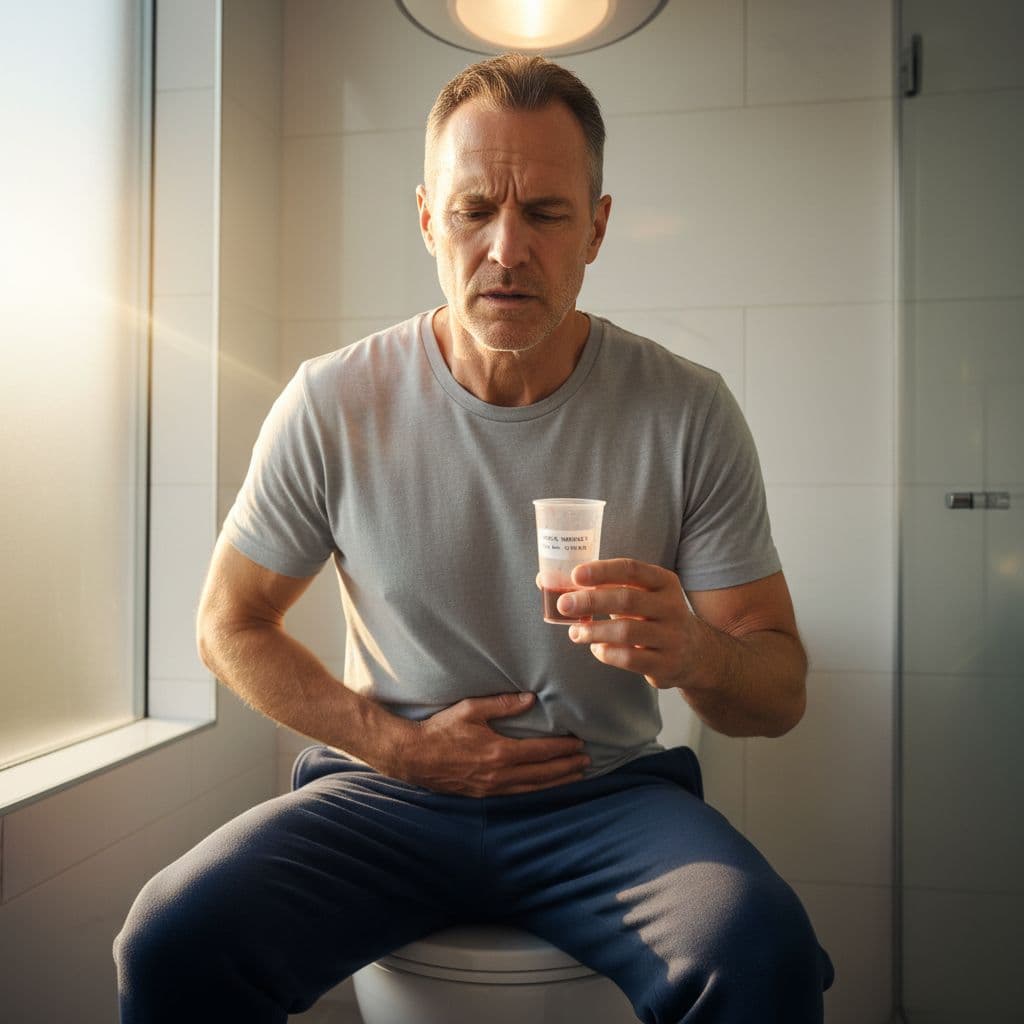
This one can creep in slowly. You might notice you’re standing there longer, the stream looks thinner, or you have to push a bit. Sometimes you finish, zip up, and feel like you could go again right away.
If it’s new, don’t shrug it off. It can come from BPH, certain meds (like cold and allergy pills), dehydration, or inflammation, but it also belongs on the list of prostate ca symptoms to discuss.
A few simple notes help your clinician help you faster:
- Timing: When did it start, and is it getting worse?
- Fluids: Are you drinking less water than usual?
- Medications and supplements: Anything new, even over-the-counter?
If it lasts more than 2 weeks or keeps getting worse, schedule a checkup. I would rather you ask early than wait until you cannot pee at all, and yes, prostate ca symptoms belong in that “ask early” category.
Other prostate CA symptoms that get missed because they feel unrelated
Not every sign feels like a bathroom problem. Some symptoms show up in places you don’t connect to the prostate, or they touch topics you’d rather not talk about.
These issues can have other causes, and that’s the point. You don’t have to decide what it is. You just need to notice what’s persistent, worsening, or unusual for you. That’s where prostate ca symptoms can hide in plain sight.
Blood in urine or semen, even once, is worth checking
Seeing blood can be scary, but ignoring it doesn’t make it safer. Blood might look bright red, pink, tea-colored, or rust-colored. In semen, it may look brownish or red-streaked.
This isn’t something to “wait and see” for weeks. Infections, kidney stones, and an enlarged prostate can cause blood too, but you still need an evaluation. If there’s a lot of blood, clots, dizziness, or you can’t pee, treat it as urgent. This can overlap with prostate ca symptoms, and it deserves fast attention.
Erection or ejaculation changes, pelvic pressure, or pain when sitting
Some men notice sex changes before urinary changes. That can look like new erectile trouble, a drop in firmness, or pain with ejaculation. Others feel pressure or a deep ache in the pelvis, lower abdomen, or the area between the scrotum and anus. Sitting for long periods can make it more obvious.
Prostatitis, pelvic muscle tension, stress, and certain medications can cause similar problems. Still, if the change is persistent, it belongs in a real conversation about prostate ca symptoms and other prostate conditions.
I know these topics can feel awkward, but your doctor has heard it all. The most important part is saying what’s changed, how long it’s been happening, and what’s bothering you most.
When symptoms may mean advanced disease, and when to get help now
Most early prostate cancer does not cause severe pain or major weight loss. When bigger red flags show up, it can mean a complication (like urinary blockage) or disease that has spread. You don’t need to panic, but you do need to move quicker.
If you’re noticing prostate ca symptoms plus signs that feel “whole-body,” don’t try to tough it out alone.
Bone pain, back or hip pain, unexplained weight loss, and severe fatigue
Persistent bone pain is different from a sore back after yard work. It can feel deep, steady, and worse at night. New weakness, numbness, or trouble walking also matters. Unexplained weight loss and severe fatigue that doesn’t match your lifestyle can be warning signs too.
These are not common early symptoms, but they matter when they happen. I want you to treat these warning signs as a reason to get checked fast.
What to do before your visit, and what tests you may be offered
A little prep keeps your appointment focused and calm. Bring a short list that includes:
- Your symptoms and when they started (include night waking and urgency)
- Any meds and supplements
- Family history of prostate, breast, ovarian, or pancreatic cancer
- Your last PSA result, if you know it
Your clinician may offer:
- PSA blood test: PSA can rise from cancer, BPH, infection, recent ejaculation, cycling, or even recent prostate irritation.
- Digital rectal exam (DRE): A quick check for prostate size and any firm or uneven areas.
- Repeat PSA: Sometimes the next step is re-checking, especially if something temporary may have raised it.
- Urine test: Helps look for infection or blood.
- Prostate MRI: Imaging that can help spot areas that look suspicious.
- Biopsy: A small tissue sample, usually guided by imaging, to confirm if cancer is present.
Get urgent care now if you cannot urinate at all, you have fever or chills with urinary symptoms, or you have heavy bleeding. Those problems need same-day help.
Conclusion
Early prostate cancer can be silent, and that’s why you can’t rely on pain as your warning light. The most overlooked prostate ca symptoms are new urinary changes, blood in urine or semen, and persistent pelvic or sexual changes that don’t match your normal.
Trust “new for you,” track it for a week or two, and book a checkup if it sticks around or worsens. You’re not being dramatic, you’re being smart. I am rooting for you to take the next step and get clarity.
Có thể bạn quan tâm
gwy858 Ultimate The World’s First Modular Exoskeleton
Ascentiz jxf What’s up, certified sofa indentation expert, the one currently melting into [...]
Tổng hợp các mẫu tranh decor hiện đại chuẩn phong cách 2026
Năm 2026 đánh dấu bước chuyển mình mạnh mẽ của nghệ thuật [...]
Review Hải Phòng – Kết nối trải nghiệm địa phương toàn diện
1. Định vị thương hiệu trong hệ sinh thái thông tin địa [...]
Xưởng May Gia Công Quần Áo uy tín tại Gavitex – tôi đã thử
Xưởng May Gia Công Quần Áo tại Gavitex – trải nghiệm thật [...]
Dự toán chi phí bảo trì xe nâng điện định kỳ cho doanh nghiệp.
Chi phí sử dụng xe nâng điện thường khá thấp so với [...]
Tổng hợp các mẫu tranh decor hiện đại chuẩn phong cách 2026
Năm 2026 đánh dấu bước chuyển mình mạnh mẽ của nghệ thuật [...]